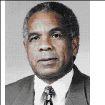
DaviesBEAL BANK of Texas, United States has acquired FINSAC's portfolio of loans for an initial payment of US$23 million.
The announcement was made yesterday by the Minister of Finance and Planning, Dr. Omar Davies at the Ministry of Finance and Planning's headquarters located at 30 National Heroes Circle, Kingston.
FINSAC's portfolio of non-performing loans held through its subsidiary Refin Trust Limited, will be sold to Jamaica Redevelopment Foundation, a subsidiary of Beal Bank.
The unpaid principal balance of the portfolio currently stands at just over US$393 million with the interest coming in at approximately $US$300 million.
FINSAC will become entitled to receive a percentage of all gross collections after closing as follows :
15 per cent of the first US$50 million collected
25 per cent of the next US$50 million collected
35 per cent of the next US$50 million collected
45 per cent of the next US$50million collected
50 per cent of all further collections thereafter
Future payments will be secured by a debenture over all the assets of Jamaica Redevelopment Founda-tion in favour of FINSAC.
The collection of the loans will be undertaken by Dennis Joslin Jamaica, which is a service provider under the overall agreement between the parties. Mr. Dennis Joslin, who is the principal of that company, operates from Tennessee in the United States, and is also substantially involved in the acquisition of loans in the United States.
Dr. Davies said: "As part of our due diligence effort, the Bank of Jamaica has sought and received an assessment by the FDIC on Beal Bank. It states unambiguously that this is a duly registered institution in good standing. The last inspection date was March 31, 2001."
In negotiating the sale of the bad debt portfolio, FINSAC on instructions from Cabinet sought and obtained concessions from Beal Bank and Dennis Joslin which it is hoped will be of special benefit to the majority of debtors. Of particular concern to the Government were those persons with debts of J$5 million or less whose residences had been used to collaterize their debts.
Of the 23,000 accounts comprising the bad debt portfolio, 21,500 are for $5 million or less. That serves as 93 per cent of the accounts.
For those persons, with loans of $5 million or less, whose owner-occupied residence is part of the security for the loan:
1) The purchasers of the portfolio will accept an amount equivalent to 80 per cent of the correct principal balance outstanding, payable within 120 days
2) The purchasers will write off all interest and restructure the correct principal balance over 20 years at 12 per cent per annum.
3) This initiative will be available for six months
The size of the portfolio has dectreased by US$19 million since May 1, 2001 when due diligence was carried out. To account for this and since the purchase price was arrived at on the basis of the earlier size, FINSAC will transfer to the Jamaica Redevelopment Foundation the Island Life Centre in New Kingston at an imputed value of US$7.5 million on the following terms:
1) The purchaser has three years to dispose of the real estate and pay FINSAC 30 per cent of the net proceeds. Until the building is sold, FINSAC will receive 30 per cent of any net rental income generated.
2) If at the end of this period the building is not sold, the parties will agree on a market value for the property through the use of independent valuators. FINSAC will then be paid 30 per cent of the determined market value within fourteen days after the value has been established.
Dr. Davies noted: "The sale of the portfolio allows the Government to get out of the business of collecting loans, and by extension, it also facilitates FINSAC's exit from the financial sector, since this activity presently constitutes one of FINSAC's major streams of work. As I have indicated before, but I feel compelled to repeat, it must not be forgotten that these loans originated in the private sector and it was never intended to have these loans remain permanently in the hands of the Government.
"A question which has been repeatedly asked is approximately what percentage of the debt will eventually be recovered. It is impossible to answer this question definitely, but a good estimate is 30 cents in the dollar. The follow up question is why didn't FINSAC accept a similar offer from all debtors.
The answer to that question is in two parts. In the first instance there are several debtors who did make offers which were accepted by FINSAC, but who have not followed through with their side of the bargin.
"The second part of the answer is that 30 cents in the dollar represents an average. In some cases the rate of recovery may be 80 cents in the dollar in the dollar. To accept 30 cents from a debtor who can afford 80 cents or to demand 30 cents from one who can only afford 10 cents or 15 cents in the dollar will guarantee failure of the process.
"It should be noted that in pursuing this transaction, the Government has followed the model employed internationally in dealing with non-performing loans acquired by the state in the wake of a financial sector crisis, where the state retains and collects on the loans for a three to four year period and thereafter disposes of them to a third party. Therefore FINSAC is no different from state resolution agencies such as KAMCO in South Korea, and the FDIC in the United States."