



Sections
- Lead Stories
- News
- Business
- Sport
- Commentary
- Letters
- Entertainment
- Arts &Leisure
- Outlook
- In Focus
- Social
- Auto
More News
- Power 106 News
- The Star
- Financial Gleaner
- Overseas News
- The Voice UK)
- Communities
- Hospitality Jamaica
Archives
Services
Subscriptions
Interactive
About Us
News Links

Book Review - A colourful read
Published: Sunday | December 14, 2008
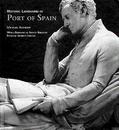
Title: Historic Landmarks of Port of Spain
Author: Michael Anthony
Publisher: Macmillan Publishers
Reviewed by: Siobhan Morrison
HOW MANY times have we heard the saying, "If walls could talk"? If stone and mortar had the chance to speak what tales they would tell. In the Historic Landmarks of Port of Spain, Trinidadian author and historian Michael Anthony turns to some of the city's most noted landmarks to recount it's history as well as that of wider Trinidad & Tobago.
An award-wining author, Anthony has written over 20 works of fiction and non-fiction. He is known for such works as Bright Road to El Dorado, The Year in San Fernando and Green Days by the River. Landmarks is his latest non-fictional endeavour.
Covers landmarks
The book, which opens with a forward by UWI professor and noted scholar in Caribbean history, Bridget Bereton, is a photographic exploration of the twin islands' capital. The book covers more than 70 landmarks and includes as many photographs, illustrations, lithographs and maps of the various monuments.
In his introduction, Anthony speaks to the origin of the city's name, Puerto de los Espanoles, which was so named by the island's original inhabitants, the Amerindians. The name, which when translated means port of the Spaniards, provides an inkling to its checkered past. Like the ports of neighbouring Caribbean islands, the port of the Spaniards was used by pirates, corsairs and seadogs to carry out raids against the settlements across the Spanish Main and to plunder silver fleets from Santa Fe de Bogot heading to Spain.
Landscape changes
The images in Anthony's book shows the changes in the islands' architecture and landscape over time, and how it mirrors the shift in the country's cultural and political ties. Trinidad and Tobago, today reflects the unique influence of Spanish, French and British occupation, as well as its progress as an independent state.
In the book, which has more than 100 pages, including glossary and index, the city is broken down into 10 segments that include Central Port of Spain, Newtwon, Queen's Park and Maraval.
Among the various points of interest are Independence Square and Brian Lara Promenade, which was so named in honour of the legendary record-making cricketer Brian Lara; The Red House and Trinity Cathedral which shed some light on the country's past political and religious conflicts, while monuments such as the Cabildo stand as a testament to the perseverance of history.
Overall, another interesting and colourful read from Michael Anthony.

