



Sections
- Lead Stories
- News
- Business
- Sport
- Commentary
- Letters
- Entertainment
- Arts &Leisure
- Outlook
- In Focus
- Social
- Auto
More News
- Power 106 News
- The Star
- Financial Gleaner
- Overseas News
- The Voice UK)
- Communities
- Hospitality Jamaica
Archives
Services
Subscriptions
Interactive
About Us
News Links

Book Review - An evaluation of events, leaders that shaped Ja since Independence
Published: Sunday | December 14, 2008
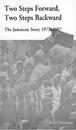
Title: Two Steps Forward, Two Steps Backward, the Jamaican Story 1972-2007
Author: Kent Gammon
Publisher: Pelican Publishers Limited
Reviewer: Barbara Nelson
THE BOOK, Two Steps Forward, Two Steps Backward, gives the viewpoint of lawyer and University of the West Indies tutor Kent Gammon on the role of Edward Seaga as a political leader and the impact of his administration on Jamaica.
Gammon also gives the reasons that, in his view, have contributed to Jamaica not achieving the level of economic and political power that had seemed at one time within reach.
In his effort to portray "the highly under-recognised and unappreciated lifelong dedication of Edward Seaga" to Jamaica, the author has examined the political leadership of Sir Alexander Bustamante, Norman Manley, Michael Manley, PJ Patterson as well as certain past events.
The Introduction is titled 'Pearl of the Caribbean.'
In Chapter 1: 'Jamaica 1972 - Here Comes Socialism Gammon' begins: "It is submitted that had we continued on the developmental model of the 1960s, chartered by the JLP, the Jamaica of today would have been among the most noted success cases of the developing world.
The foreign policy adopted by the JLP Government since the 1960s was primarily characterised by aligning itself with Anglo-American views of the world."
He writes that Michael Manley "charismatic par excellence" tried to do what Sir Alexander Bustamante and the JLP had done in their terms in government. But whereas Bustamante had liberated a positive dynamic of the working class and energised the people, Manley wanted to unleash the Jamaican psyche through a negative "pulling-down" process.
In his opinion the "unquestionably socialist" PNP was more concerned with "dividing the cake into equal slices" in its efforts to create an egalitarian society. But in the process, mining, tourism and agriculture deteriorated steadily.
Second mandate
The democratic socialists received a second mandate from the Jamaican electorate in December 1976 about the same time that actions by OPEC (Organisation of Petroleum Exporting Countries) resulted in a severe world energy crisis. As we read in Chapter 11: Jamaica 1976 - The New International Economic Order, foreign and local investments declined, there was the highest number of strikes since the 1930s, tourism declined, a state of emergency was introduced, and the state took control over the main media channels. In the run up to the 1980 general elections more than 800 people were killed in a society that was marked by political tribalism.
"Ignorance, indolence and resentment became the order of the day during the first Michael Manley regime and from this was spawned the country's most formidable opponent yet, indiscipline," Gammon writes.
He adds that "one of the most tragic consequences coming out of the radical government policies in the 1970s was the mass emigration of significant key citizens within the more prominent strata of Jamaican society."
In Chapter 3, 'Malice to None', Gammon recalls that in 1980 after the economy had gone through six years of decline, the JLP, the centrist party led by Edward Seaga, was elected to office. "It was going to be very challenging for the Seaga government to restore Jamaica's erstwhile strong economic position of the 1960s."
The author's expresses his opinion in Chapter 4, 'Beyond the Tide' that "Edward Seaga, is one of the least revered and respected prime ministers, particularly as compared with Michael Manley despite being most deserving of the highest respect based on the accomplishments of his life in Jamaican politics".
Economic growth
Seaga's administration had to rebuild a shattered economy. Further, Gammon says he finds it surprising "when viewed in strictly economic terms against the background of the few years of positive economic growth before the 1989 general election, that the Seaga administration did not win a third term."
The remaining chapters are 'Crisis of Confidence', 'The Current Predicament', 'Embracing the Future', 'Restoring the Balance of Confidence' and 'Let's Get to Work'.
Two Steps Forward, Two Steps Backward is clearly written, well-researched and will no doubt help many readers to understand and evaluate some of the events that have shaped Jamaica since it became independent in 1962.

