Howard Campbell, Gleaner Writer

Douglas Orane, chairman and CEO at GraceKennedy, checks out the retail trade with Richard Nwaobi, Grace distributor in Ghana, during Orane's visit to that African nation in August. - Contributed
DURING A visit to Ghana in August, GraceKennedy Limited CEO Douglas Orane said he noticed glaring similarities between Jamaica and the West African country. These include mannerisms of the people and food distribution.
There is a marked difference, however, in how the countries deal with an issue of particular concern to Jamaicans.
"When I look at the crime rate in Ghana and compare it to Jamaica it's totally different. The murder rate there is two per 100,000. In Jamaica it's 55 per 100,000, and it's not because they're wealthier than us," Orane noted in a recent interview.
With a land mass of 238,535 kilometres, Ghana is one of Africa's largest countries. It has more than 20 million citizens, many of whom live in the capital, Accra.
Orane said he met with the Ghanaian commissioner of police who told him that, although the country has many tribes with different customs, when it comes to dealing with crime they share common ground.
Ghana crime model
"He said in every community, rural or urban, any person who steps out of line and does something wrong, other people go to them and say, 'no you can't do that'," Orane related. "If they do it a second time, they call the police."
Orane believes the Ghana crime model can be duplicated in Jamaica, but says government has to look to history for help.
"The majority of people in Jamaica are of African ancestry, from places like Ghana, so I think the experience of slavery has actually contributed to the fact that we have such a prevalence of violence in our culture," he said. "My feeling is that unless we start to explore the historical reasons for why we behave the way we do, we will not be able to correct them."
During Heritage Week, Orane shared the 'findings' of his African trip with 250 primary school children during a seminar hosted by GraceKennedy.
Through personal photos, the students not only got a peek inside African culture, but also the Elmina and Ile de Goree (in Senegal) trading posts where most Africans were sold into slavery.
Orane said the enthusiastic reaction to the 'documentary' proved that similar efforts would peak the interest of youth in their African heritage.
"It needs to be a broad-based exploration of ourselves as a people," he said.
The police have pushed community policing to help bridge relations with the Jamaica Constabulary Force and citizens, especially in inner-city communities. Residents in many of these areas, however, consistently accuse the police of unprofessional conduct. Orane and his wife, Michelle, also visited Senegal and Morocco to mark the 200th anniversary of the abolition of the Trans-Atlantic slave trade.
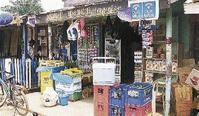
A small shop in Ghana.