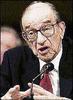
- File
Former Federal Reserve chairman, Alan Greenspan, says he failed to detect signs of subprime collapse.
Former United States Federal Reserve Chairman Alan Greenspan, describing the current financial crisis as a "once-in-a-century credit tsunami" acknowledged Thursday that the crisis has exposed flaws in his thinking and in the workings of the free-market system.
Greenspan told the House Oversight Committee that his belief that banks would be more prudent in their lending practices because of the need to protect their stockholders had been proven wrong by the current crisis.
He called this a "mistake" in his views and said he had been shocked by that.
Protecting shareholders
Greenspan said he had made a "mistake" in believing that banks in operating in their self-interest would be sufficient to protect their shareholders and the equity in their institutions.
Greenspan called this "a flaw in the model that I perceived is the critical functioning structure that defines how the world works."
The head of the US central bank for 18 1/2 years, Greenspan said in his testimony to the committee that he and others who believed lending institutions would do a good job of protecting their shareholders are in a "state of shocked disbelief".
During questioning, Greenspan was challenged about various statements he had made during the five-year housing boom, including forecasts that it was unlikely that there would be a nationwide collapse of home prices.
Greenspan said he had failed to predict a significant decline in home prices because the country had never experienced such a decline before.
Greenspan said that the current crisis had "turned out to be much broader than anything that I could have imagined".
The committee called Greenspan to testify along with former Treasury Secretary John Snow and Securities and Exchange Commission Chairman Christopher Cox as lawmakers sought to discover if regulatory failings had contributed to the crisis.
Demand for securities
In his testimony, Greenspan blamed the problems on heavy demand for securities backed by subprime mortgages by investors who did not worry that the boom in home prices might come to a crashing halt.
"Given the financial damage to date, I cannot see how we can avoid a significant rise in layoffs and unemployment," Greenspan said.
"Fearful American households are attempting to adjust, as best they can, to a rapid contraction in credit availability, threats to retirement funds and increased job insecurity."
Greenspan said that a necessary condition for the crisis to end will be a stabilisation in home prices but he said that was not likely to occur for "many months in the future".