
Preventable diseases are the main causes of death and disabilities in our society. A healthy lifestyle that includes exercise will reduce risk factors for chronic diseases.
The leading cause of death and disability is heart disease. Exercise has been used extensively in the prevention and management of cardiovascular disease. A similar group of risk factors is associated with cardiovascular disease and most other chronic lifestyle diseases. Thus, exercise while managing heart disease will be acting against other lifestyle issues.
A lifestyle that is void of exercise is likely to reflect an increase in the existence of premature health problems. Regrettably, in many of these cases, especially those that are related to cardiovascular disease, the initial sign is sudden death or a major health crisis where the survivor experiences a complicated recovery or a disabling experience. A significant majority of premature cardiovascular health problems are preventable. With exercise as an integral part of our lifestyle, it slows down as well as reverses the risk and progression of chronic health problems.
High blood pressure
Risk factors such as high blood pressure, high blood cholesterol level and sedentary lifestyle are all controllable with exercise. Unfortunately, these are all independently related to cardiovascular health problems and directly or indirectly associated with many chronic diseases. The evidence of risk factors is not a guarantee that we will become diseased prematurely, nor does the absence mean we will be immune to health problems. As the factors increase, our chances of prematurely suffering from lifestyle diseases also increase.
Start moving
We should not wait until we are at an age where the threshold for the development of health-risk factors are greatest before starting an exercise programme. This would be quite imprudent. Chronic health problems are not developed overnight and so will require long-term solutions. Even though health risks are merely suggestions of a predisposition for the development of disease, it is necessary to focus on those factors that can be controlled. For example, exercise will help to reduce high blood pressure and likewise reduce the risk of a heart attack. Exercise will change our blood cholesterol profile for the better by improving the ratio of more desirable to less desirable cholesterol. These spin-offs are even more apparent when exercise is used for weight management.
The principles that guide the development of an exercise prescription facilitate the biochemical adaptations that are necessary to eliminate the relevant health risk factors. An intervention of exercise, nutrition and behaviour change is insurance against premature chronic diseases.
Our involvement in an exercise programme is an excellent decision to improve our health and reduce disease risk.
Dr Kenneth Gardner is an exercise physiologist at Holiday Hills Research Center; email: yourhealth@gleanerjm.com.

Never let your knees go past your toes as this increases the risk of injury. - file photos
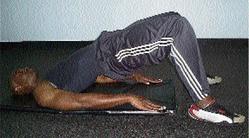
Lift the hips, using very little if any help from the hands. To increase the resistance of this exercise, when you lower your hips, don't let them touch the mat. Stop your descent about an inch off the mat.