
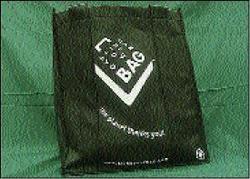
Plastic bags are not biodegradable and made from oil a non-renewable energy source. Do your part, reduce the number of plastic bags you use. - Nashauna Drummond/Lifestyle Coordinator
Today is recognised internationally as Earth Day and it is marked by a number of events taking place around the world aimed at protecting and preserving the only Earth we've got.
At the start of the year The Gleaner Company began its year-long campaign focusing on the environment. As you hear terms like climate change and global warming floating around the airwaves, keep reading The Gleaner for an explanation of what exactly this means and the simple things you can do to ensure a future on earth for generations to come.
Happy Earth Day!
Bring your own bag
Ever noticed that whenever you get home from the supermarket and unpack your groceries you have around a dozen plastic bags sitting in front of you? What do you do with them? Do you pack them away in your cupboards or do you re-use them to get rid of garbage?
Plastic bags are not biodegradable, so whatever you do with them after getting them into your home, they never just disintegrate into nothing. They remain in the environment for a very long time. One of the raw materials of plastic bags is oil. Therefore, the more we use plastic bags, the more we waste oil; a non-renewable energy source, which is now fetching record high prices.
You've seen them in drains and gullies. They prevent rainwater from being absorbed naturally into the land and, if plastic bags are burnt, they emit hazardous gases, causing air pollution. At times, they get washed into the sea and get swallowed by marine life causing death.
Countries around the world are decreasing the number of plastic bags they use. In January 2002, the South African Government required manufacturers to make plastic bags more durable and more expensive to discourage their disposal, prompting a 90 per cent reduction in use. Ireland instituted a per-bag tax in March 2002, which led to a 95 per cent reduction in use. In the early 1990s, the Ladakh Women's Alliance and other citizens groups led a successful campaign to ban plastic bags in that Indian province where May 1 is now celebrated as "Plastic Ban Day." Australia, Canada, New Zealand, the Philippines, Taiwan, and the United Kingdom also have plans to ban or tax plastic bags.
Supermarkets around the world are voluntarily encouraging shoppers to forgo plastic bags, or to bring their own bags. 'Bring your own bag', is an environ-mentally friendly alternative to plastic bags. They can can be used repeatedly to carry your groceries thus reducing the need and number of plastic bags used.
Consumer reaction
Loshusan Supermarket on Kings House Road, has brought the bags in for the second time as a trial run to see how consumers react to them. Manager of the supermarket, Palmela Kinghorne, notes that the response has been going very well. "They go very fast. They take them back to pack their groceries and they are asking if we can get them in larger sizes. This is the second time we have brought them in and we are thinking of continuing," she said.
Just imagine how significantly you could decrease the number of bags you would take home each day and the small, but helpful way you would be contributing to the preservation of planet Earth.
Save the Earth
According to scientists, last year (2007) has been the warmest since 1850. The melting of the glaciers, increased and prolonged heatwaves across the world and more violent storms have now turned everyone's attention to global warming and climate change.
The Intergovernmental Panel on Climate Change (IPCC) said temperatures will probably continue to increase. It also projected that sea levels were likely to rise by 28-43cm, and global warming was likely to influence the intensity of tropical storms. The panel also asserted that there was a 90 per cent probability that human activities are responsible for the warming of the Earth.
Tips
Unplug computers and appliances such as microwave when not in use.
Iron once a week instead of everyday.
Turn off lights when not in use
Take fewer bags at the supermarket. It is not necessary to put each item in its own bag.
Turn off surge protectors not attached to the refrigerator when not in use or when leaving home for the day.
Unplug phone chargers when phones are not being charged
Turn off the tap while brushing your teeth.


















