
Wendel Abel - I AM WHAT I THINK
The silence
Harold was a business executive; married with a family. Everything was going well for him; he drove fancy cars, he enjoyed, loved and lived his life well. All of this changed when he developed bipolar disorder. The marriage ended.
He has become estranged from his family. His children do not talk about him and do not make contact with him. "We have never been able to accept his mental illness. As a family, we have suffered a lot, we cannot talk about this, it is too painful," said his wife.
The shame
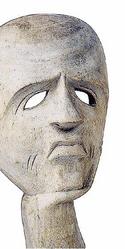
She was bright, beautiful and always full of life. She started university and during the second year, she started to exhibit strange behaviour. She became suspicious and constantly reported that people were trying to hurt her. She was diagnosed with schizophrenia.
Her condition deteriorated. She dropped out of university. She now spends most of her days locked away in her bedroom, talking and laughing to herself. She does not attend to her personal hygiene and does not communicate or socialise with others. Wasted, locked away, forgotten. No one asks for her. Her family does not speak of her. They have never accepted the illness and have never sought treatment for her. The shame.
The stigma
Hear the voices. "Although I am a qualified accountant I find it difficult to get a job. People make promises but they have never really materialised. I was diagnosed with depression 10 years ago, after I lost my house on an auction and my wife migrated to Canada with my two children. I have not heard from them since. I thought my life was going to end. I lost everything - my family, my home and my job. I became depressed.
"During one period of depression, I experienced very negative thoughts and feelings of hopelessness. I did not see any purpose in living and I attempted suicide. I was never forgiven I am completely recovered and functioning well, I am constantly discriminated against."
Living with a mental disorder in a small society can be very difficult. The stigma.
The grim reality
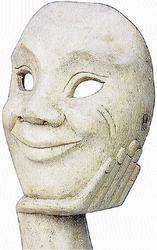
Mental illness touches one in every four lives worldwide. They include a group of disorders, most of which are treatable. Yet having a mental illness still becomes a cause for silence and a source of shame, and mental disorders are associated with high levels of stigma and discrimination.
It's not the end of the world.
If you are living with a mental disorder, take consolation in the fact that you are not alone and that many great and famous persons have had their personal struggles with mental illness, survived the odds and have made worthwhile contributions.
Here are a few persons who have either written about their illness or have been written about.
Abraham Lincoln, President of the United States, and Eugene O'Neil, playwright, both suffered from depression.
Sir Winston Churchill, the great Prime Minister of Britain, was diagnosed with bipolar disorder.
Virginia Woolf, British writer, and Ludwig van Beethoven, classical composer, had bipolar disorder.
Leo Tolstoy, author, and John Keats, poet, also lived with mental disorders.
Tennessee Williams, playwright, and Vincent Van Gogh, artist, wrote about their personal struggles with mental illness.
This may be surprising to many but Isaac Newton, the great scientist, had bipolar disorder, and Ernest Hemingway suffered from depression.
Today, as we celebrate 'World Mental Health Day', it presents another opportunity to end the silence, remove the shame and reduce stigma.
1) Accept your illness
2) Talk about it
3) Seek treatment
4) Live, enjoy life and realise your dreams.
See related article, 'Eat away mental illness'.
Dr. Wendel Abel is a consultant psychiatrist and head, Section of Psychiatry, Dept. Of Community Health and Psychiatry, University of the West Indies; email: yourhealth@gleanerjm.com 

















