
Book Review - Novel of intriguing life experiences
Published: Sunday | January 28, 2007
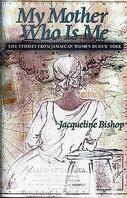
Title: My Mother Who Is Me: Life stories from Jamaican Women in New York
Author: Jacqueline Bishop
Publishers: Africa World Press, Inc., 2006. 204 pages
Reviewed by: Mary Hanna
Highly acclaimed by leading women scholars, Jacqueline Bishop's collection of life stories is, in the words of Carol Boyce Davis, 'an innovative and contemporary approach to bringing to public attention voices often lost in the Transnational shuffle'. Jacqueline Bishop is the founder of Calabash: A Journal of Caribbean Arts and Letters and the author of Fauna, a collection of poems, and The River's Song, a novel. Her award-winning short stories, poetry and other writings have been widely published.
In My Mother Who Is Me, Bishop has provided a safe space for diverse Jamaican females to voice their loss as they move into exile, their forced separation from their home island (based mainly on economy), and their longing for a country that they have had to leave behind. She has allowed the reader to experience conversations with women in a wide-ranging repertoire of voices, from powerful personal tales of courage and survival to more complicated testaments of lives lived in rare privilege, or on the margins of society. Lorna Goodison observes that these narratives speak eloquently to the wisdom, ingenuity and resourcefulness of Jamaican women.
These life stories fall into two groups: Part one are stories from the African poor who have sought opportunities in Canada, England, and America, and Part two are stories of Jamaican women of non-African origin whose lives have been couched in rare privilege. Both groups speak eloquently to Bishop in long and absorbing interviews that tell the stories of their seeking wider horizons through emigration.
These women are clear in their observations: their stories resonate with the usual triumphs and failures of the immigrant experience, and yet each one is as individual experience. They contain 500 years of Jamaica and Caribbean history with all their complexities and contradictions. We see the proverbial strength of the West Indian woman coupled with her challenges as a female in a male-dominated society, so that each story lays bare the position of women in Caribbean culture.
Themes
Several themes bind the narratives in both sections: migration and separation, politics and violence in Jamaica, poverty and deprivation, and the intersection of gender, race, and class in Jamaican society. The women interviewed in this book are successful in the United States. They range from bank managers, social workers, health professionals, film producers, and creative writers.
Scholar Rebecca Tortello speaks for the Lebanese experience and artist Anna Ruth Henriques for growing up Jewish in Jamaica. Suzette speaks to the Chinese experience, and Jennifer to the Indo-Jamaican. These voices are resonant with the pull of both places and across their varied economic, political, and social backgrounds. Maxine explains the contradictions in Jamaican society in which women are expected to "achieve academically just like the boys", but at the same time they must master domestic chores. Another conflict is that of conservative views (women who disapprove of homosexuality) and openly practising lesbians, like Stacey Ann Chin.
The stories of these 'other' Jamaicans make the point that food helps to define their relationship with their culture. Jennifer says, 'The only time I felt very, let's say Indian, was because of the kinds of food cooked in my house - my mother loved Hindu food.' Rebecca says, 'The only aspect of my Lebanese culture that I am familiar with is the food. My great-grandmother cooked the food and passed it down to the rest of us.' Suzette says, 'The only thing definitely Chinese that I remember about my family was that my father cooked a lot of Chinese food.'
Not a scientific study
These life stories do not represent a scientific study of Jamaican women, however. Rather, the collection is a sensitively written collection of narratives that speak to the experiences of Jamaican immigrant women. It shows how some individual Jamaican immigrant women look at the experiences that have played the most pivotal roles in the lives they live today.
Collectively, these narratives tell of the lives lived by Jamaican women, both in the United States and on the island, and also there are stories of their American-born daughters. The women talk about the reasons they migrated, whether for economic gain, to pursue a higher education, or to join family members already in the United States; Jamaican-born daughters talk about learning to fend for themselves at an early age and the painful separation and uneasy reconciliation with their mothers, while American-born daughters talk about straddling both cultures. Of Jamaica, the women say: 'Jamaica is for me a base, is my place, it's continuity, it is stable, it is there, it is me, it is my roots'. Of America, they speak of the challenges of raising American children and of negotiating a new identity.
These brave women tell of lives of painful, almost unbearable contradictions and speak of being raised 'motherless', while others tell of the incredible racial and class privileges they enjoyed on the island and later in the United States.
Bishop explains that to find women for the project she started close to home: Marjorie is her mother; Maxine and Marsha are friends, for example. Iris was suggested to her by a friend; she was the first female mayor of Kingston, who was at the time living in the Bronx. Bishop notes that all the women in the book come laden with 'all the insight, all the baggage, and all the biases of their peer or familial relationship to myself: I would not call the women in the book a representative sample of Jamaican women, but I would insist that they too have a story to tell' about what it means to be a Jamaican woman.
The stories attempt to show the reader how these Jamaican women see themselves and how they perceive the world around them. As such Bishop struggled to edit each interview to best express the individual telling the story. The result is an intriguing compendium of life experiences, overlapping themes, and narratives that are individual stories of 'wit, wonder, and revelation' to be savoured and learned from.