John Myers Jr., Agriculture Coordinator
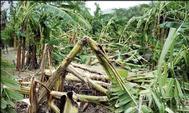
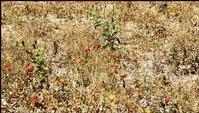
Lefy: Banana trees on a plantation in Seaforth, St.Thomas, which were damaged by Hurricane Dennis in July last year. Right: Tomatoes wither under the scorching heat on a farm in St. Elizabeth due to severe drought conditions which affected the island early last year. - PHOTOS BY IAN ALLEN/STAFF PHOTOGRAPHER
WITH ANOTHER busy hurricane season forecasted, which experts have linked to the effects of climate change, the island's agricultural production could face further destruction and destabilise the island's food security.
In the last two years alone the sector has been affected by at least four hurricanes, several floods, droughts and bush fires, resulting in more than $6 billion in damage, loss of income for thousands of farmers and disruption in the country's food supply. Some farmers have rebounded and have restarted production, however many are yet to recover from the destruction. This forced the Government last year to relax import duties to allow for the importation of foods that were in short supply.
And with the United States-based National Oceanic and Atmospheric Administration (NOAA) predicting another active hurricane season this year, this could present even more serious implications for the sustainability of the agricultural sector and the island's food security. The NOAA projects between 13 and 16 storms for the 2006 North Atlantic Hurricane Season, of which between six and eight are expected to develop into hurricanes. The hurricane season officially started on June 1 and will end November 30.
AGRICULTURAL PRODUCTION DECLINED
The Planning Institute of Jamaica (PIOJ) in the 2005 survey of social and economic conditions in Jamaica, reported that agricultural production declined by 7.3 per cent. The PIOJ blamed the downturn in production on the residual effects of hurricanes Ivan, Dennis, Emily, Tropical Storm Wilma and drought conditions. The PIOJ said production of non-traditional crops declined 2.1 per cent, while domestic crop production declined by 3.4 per cent when compared with production in 2004. The fishing sector suffered severely as production declined by 15.9 per cent.
The World Health Organisation (WHO) forecast that the unusual weather patterns would continue in the years ahead as the impact of climate change becomes more severe. The WHO, in its report "Climate Variability and Change and their Health Effects in Small Island States" outlined that the "major concern for many small island states is that climate change could alter the frequency and severity of extreme weather and climate events such as cyclones (hurricanes), floods and droughts."
The health organisation warned that these intense storms could trigger larger storm surges and widespread coastline flooding, cause salination of water sources, impair crop production, damage coastal ecosystems, coral reefs and coastal fisheries.
HEAT STRESS
"Farming of subsistence food crops and crops for export may be adversely affected by changes in precipitation, rising temperatures causing heat stress to plants, salinisation resulting from sea-level rise and extreme weather and climate events ...," the WHO noted in the report released at the 11th United Nations Climate Change Conference in Montreal, Canada, in December. Assessments done by the WHO suggested small island states, such as Jamaica and other Caribbean countries, will experience more extreme temperatures and precipitation (rainfall) as the level of greenhouse gas emissions into the atmosphere increases.
When greenhouse gases, such as carbon dioxide are emitted, they trap heat in the air, resulting in global warming. Based on current projections, the temperatures in the Atlantic and Caribbean are expected to rise two degrees celsius by 2050 and three degrees celsius by 2080 as a result of greenhouse gas emissions. The WHO has found that the increase in surface air temperatures in the Pacific Ocean and Caribbean Sea have been greater than the global warming rate so far.
Dr. Dunstan Campbell, the Food and Agriculture Organisation's (FAO) country representative, said the effects of climate change were already being felt and highlighted the need for the region to move swiftly to implement measures to reduce the impact. But unfortunately, he noted that there were some persons in key positions in the respective Caribbean territories who were not convinced of the impact of climate change and the implications for the region.
"The weather pattern is one where the dry season is much longer and the fact that most of our food production is rain fed, it means that the switch to irrigation and irrigation systems is not moving as fast as climate change," he stressed. "Forest fires is another area where we are seeing increased (activity), again because of severe drought," Dr. Campbell added.
In the Bahamas, for example, the FAO representative pointed out that water wells were becoming salinated (salted) due to sea level rise. "It means that you have to put in place other mechanisms to provide water for people and desalination of water is a very expensive thing," he said.
GREENHOUSE TECHNOLOGY
Roger Clarke, Minister of Agriculture and Lands, acknowledged the threat
climate change posed to agriculture. He admitted that most of the methods now being used do contribute to the vulnerability of the sector but noted that steps were being taken to improve production methods such as the introduction of greenhouse technology in farming. This technology, he explained, will assist in reducing the food security risk posed by climate change. "Some of them can withstand some of the hurricanes and they are in a way able to help you to produce even in drought conditions (or) in rainy conditions because they (the crops) are not exposed so much to the elements," the Minister explained further.
"The major threat would be the hurricanes, if they are of a certain intensity, but with the greenhouse (technology) you can produce right throughout the year and it helps because a major problem that we face is that we depend on rainfall," Mr. Clarke added.
To reduce the impact of climate change on agricultural production in the medium to long term, the WHO recommended that small island states undertake crop breeding to select species better equipped to handle the lower-water, high temperature conditions; grow different crops or species that survive better under adverse conditions and improve soil-building techniques.