- CONTRIBUTED
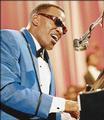
Jamie Foxx as American legend Ray Charles.
Tanya Batson-Savage, Freelance Writer
THE SEGMENT of drive-in thoroughfare linking Glory to Ray is an interesting one. It is dotted by signs which inform the observant traveller that change is at least a few miles down the road. It is by no means a smooth road, but a lot of sweat has gone into removing some of the boulders erected by sexism and racism which stood in the way.
These boulders have been chipped away by actors who through maybe some luck and sheer force of will and talent have carved their names into celluloid history. Despite Catwoman, Halle Berry will go down in history as the first Black woman to earn the best actress Oscar.
It is easy to imagine, then, that the greatest sign of change is the announcement of the 2005 Oscar nominations. Hearing that five of the 20 nominations for acting have gone to black nominees can inspire one to act like Bruce Willis at the end of The Last Boy Scout and perform a terrifyingly embarrassing jig.
ECSTATIC HURRAY
However, after the ecstatic hurray which followed Halle Berry and Denzel Washington's Best Actor coup in 2002, there is reason for caution before dancing.
A look at the changes in the Hollywood landscape between the late 1980s and today, when Jamie Foxx has been nominated in two acting categories, however, may allow one to lift the caution tape. Of course, that is if one has the wisdom passed down by grandmothers over the ages to 'cut yuh yeye' and ignore the credibility of Foxx's being up for a supporting actor nomination when his role in Collateral was arguably not a supporting role.
Winning - or even being nominated - for an Oscar can lend incredible mileage to one's acting career. Of course, it depends on the driver. Some actors get stuck in the same gear and others downshifted. Cuba Gooding Jr.'s career since winning the Best Supporting Actor Oscar (1996) may be the sleep used to mark death.
After seeming to gain momentum with Instinct (1999), Murder of Crows (1999) and Men of Honour (2000), Gooding Jr. tunnelled into the potholes such as Boat Trip (hopefully the lowest he will ever go). His latest movies have given him a reputation for being over the top, which hinders his being taken seriously and creates a dramatic about turn since his first starring role in Boyz N The Hood.
On the other hand, since winning the Best Supporting Actor Oscar (Glory, 1989) Denzel Washington has not slowed down, even though it would be approximately 10 years and many brilliant performances before he was dubbed Best Actor.
Indeed, 1989 was significant for more than greasing Washington's career. In that year, Morgan Freeman was in three groundbreaking movies.
A co-star of Glory, Freeman was also in Lean on Me and Driving Miss Daisy. He has since convincingly played a myriad of roles from God to the President of the United States. Freeman's career has probably typified the trials of a Black man breaking the celluloid ceiling in Hollywood. Despite having won Obies for his performances on stage, it was not until he was fifty years old that Freeman began getting the acclaim, or even the meaty roles in film that his talent deserved.
In 2002 the Guerrilla Girls group staged a campaign aimed at pointing out the biases in the Oscars. The BBC News website, in their coverage of the event, pointed to the campaign and its declaring an anatomically correct Oscar, who was "white and male and balding, just like the guys who win". The billboard also declared that at the time only three per cent of acting awards had gone to "people of colour", while 94 per cent of writing awards go to men.
Since then, Hollywood has been accused of maturing and accepting the fact that Oscar comes in other shades and genders. Yet it remains easy for Black women to fall into ignominy.
This happens because of role scarcity. Actors such as Washington, Will Smith, Freeman, Laurence Fisburne and now Foxx have managed to become the box office draws that they are by escaping the 'Black' niche. They often claim roles that could go to persons of any race. Both Freeman (Million Dollar Baby) and Foxx (Collateral) have been nominated for roles this year which are not linked to race. Washington has claimed roles that would initially have gone to white men, as in Shakespeare's Much Ado About Nothing. He returns to Shakespeare, this time on the stage, to play Julius Ceaser.
MORE BLACKS
Real change, however, needs more black stories being told and more blacks behind the camera. As such, the phenomenal work of Spike Lee in creating work for Black actors cannot be ignored, though Oscar has deftly avoided him. In her 2002 speech, Berry made sure to thank Lee for having given her her first role in a feature film, Jungle Fever.
Lee's Jungle Fever provided several Black actors with another step on the road to at least becoming 'That Guys' and some of them managed to take it further. Jungle Fever starred Wesley Snipes and also featured Samuel Jackson and Queen Latifah, all of whom have become forces to reckon with.
John Singleton's Boyz N the Hood was also extremely significant. The film featured Laurence Fishburne, Ice Cube, Nia Long, Angela Bassett and Morris Chestnut. Indeed, though it was not a watershed Academy Awards period, the early 1990s was significant for providing Black actors with work. Films such as New Jack City, Ricochet, Malcolm X, Mississippi Massala, Mo Money, Sister Act and South Central.
RAPPERS TURNED ACTORS
Washington also took a spin as director with Antoine Fisher and hopefully he will make his way back there again. Interestingly rappers turned actors Will Smith, Queen Latifah and Ice Cube have all realised the value of being in charge and have added producer and/or executive producer credits to their names. Both Smith and Ice Cube have been doing so since the mid-1990s and the result is evident. While Ice Cube may never get an Oscar, as Friday which he wrote and produced proves he will probably never be out of work either.
So whether Foxx or Don Cheadle, who has had a stellar though hardly recognised career, gets the Oscar for Best Actor is not all-important. What is matters is what comes after. And if you listen carefully, you may well hear the bulldozers being revved to knock over a few more hurdles.
It is, however, time for the women to batter-up.