By Danielle Weekes, Voice Reporter 
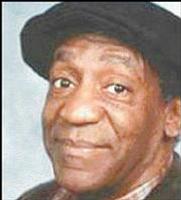
Cosby
"PEOPLE MARCHED and were hit in the face with rocks to get an education, and now we've got these knuckleheads walking around who can't speak English," fumed Bill Cosby recently.
The usually soft-spoken actor was not in the mood to crack jokes. He was talking at a ceremony commemorating the 50th anniversary of Brown vs. the Board of Education, the case that jump-started the desegregation of American schools.
But he had something else on his mind the proliferation of street language in black communities, especially among the poorer classes.
"[They have] names like Shaniqua, Taliqua and Mohammed and all that crap, and all of them are in jail," he railed. "They are standing on the corner and they can't speak English. I can't even talk like these people talk. 'Why you ain't and where you is?' Everybody knows it's important to speak English except these knuckleheads. You can't be a doctor with that kind of crap coming out of your mouth."
The 66-year-old television star was quick to counter claims that he was merely airing the community's 'dirty laundry.'
He said: 'Let me tell you something. Your dirty laundry gets out of school at 2.30 every day, it's cursing as it's walking up and down the street. They think they're hip. They can't read, they can't write. They're laughing and giggling, and they're going nowhere."
United Kingdom Government statistics back Cosby's view.
Last year, 36 per cent of black pupils gained A to C grades in GCSEs, compared with a national average of 53 per cent.
Only 25 per cent of black boys and 40 per cent of girls made the grade. Many had a poor grasp of written English.
"People are taking the English language and making their own language. But it isn't a language that has anything to do with the credentials of higher education," said Cosby.
CRITICS COUNTER
However, his critics claim that by linking Standard English and high educational achievement he underestimates the importance of language to a black youth's identity.
They point to young white British boys walking through Brixton spouting an intricate mix of cockney and Jamaican patois.
They say the use of slang, like 'Wha gwan?' ('What's happening?') connects people linguistically and culturally. Street language often links groups of young people from different ethnicities.
Urban street culture has created a new language that leaves the older generation baffled, but this process is nothing new and is another example of language evolving.
Over the past two years hip-hop has coined terms like 'bling-bling' and 'phat' that have been added to the Oxford English Dictionary, but slang and Creole are still regarded as the languages of the uneducated.
For many kids, the ability to speak the lingo is central to a sense of self-belief and fitting in, says poet Benjamin Zephaniah, who uses a mix of slang and Jamaican Creole in his poetry.
He recalled: "Growing up, teachers always used to call me up on my strong Jamaican accent. But it was who I was and I wasn't going to change that for anything. I understood Standard English, but I also understood that the way people expressed themselves was a part of who they were. I wasn't prepared to compromise that. I learnt to separate the two. Who I was and what I needed to be in order to be seen as intelligent."
John Wells, professor of phonetics at University College London, said: "These forms of slang are waved around like a badge by many youths to show they are cool about being black. It is a style of language they use in addition to that spoken in their area and which they can adapt when necessary.
"They can switch their identities, they can be black, they can be British or they can be both. It is also a form of empowerment. It gives an opportunity for teenagers to be rebellious and to show, if they wish, that they can be something opposite to the mainstream if need be. That this style of speech is spilling into written work of students means they are spending much more time in their black persona than the British one."
SLANG PROJECT
A ground-breaking pilot project at Lilian Bayliss Secondary School in Kennington, south London, encourages the use of slang in certain scenarios.
Pupils are not prevented from using it at school, but cannot in written exams. The change came when exam inspectors noticed that students often used Creole and colloquial phrases in their written work.
Since January, teachers have been instructed to correct errors in spoken English and encourage students to speak exam English in a bid to break the cycle of under-achievement.
If a child's speech slips into slang or Creole, they are asked to repeat it in exam English. The word is then written on the board and the teacher explains its meaning in Standard English.
Head teacher Gary Phillips says the unorthodox teaching methods are necessary to raise achievement levels. His school has been working with the Department for Education and Skills (DfES) on the Aiming Higher initiative, which is looking at ways of engaging African Caribbean boys in the education system.
If his slang project reaps rewards, it is likely to be rolled out nationally next year. He explained: "I have no problem with the students speaking to each other in Creole or slang but we found that many of the boys were getting low grades in their written work, when we knew they could do better. We are not banning slang in the playground and we are in no way suggesting that the way they speak is inferior. We are teaching them to succeed in the world of work and helping them to get better grades."
COULD BE DANGEROUS
But experts have warned that the project could be dangerous if not applied sensitively.
Educational consultant Gus John pointed to historical associations between the Caribbean Creoles and the perception of ignorance.
He said: "It would be an affront to children of African and Caribbean heritage to suggest they should not speak the language of their people. There is a difference between the street slang being spoken by many black British youths and the Caribbean Creoles.
"The latter are languages in themselves and should be treated like Urdu and French. Our black children should not be made to think they are ignorant because they are most comfortable speaking Creole. This Government need not heap any more ignominy on our children by suggesting that their fluency in the language of their heritage makes them backward."
Over 50 different English dialects are spoken in Britain, not including the Caribbean vernaculars.
Dr. Ruth Cherrington, a fellow in cultural studies at Warwick University, criticised the arrogance of the educational system.
She said: "The English educational system already implies that one form of English is far superior to all others. Standard English itself is a dialect. It is only so dominant because it was spoken by the aristocracy who filtered it through the education system after the Norman invasion.
"Historically, the upper classes have had this arrogance that there was only one correct model for good English and everything else was for the uneducated. There is a danger that this project reaffirms these old values."