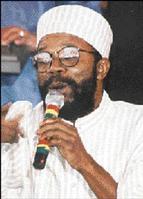
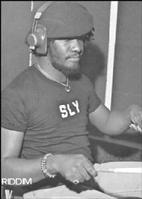
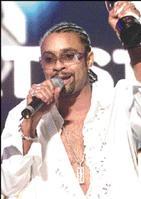
FROM LEFT ARE HAMMOND, SLY DUNBAR and SHAGGYGermaine Smith
, Staff Reporter
IN THE world of dancehall, the thousands trying to get into the business daily, a few of those already in the business and even those on the outside sometimes feel that it does not take much to get started.
Several aspiring deejays feel that once they have a few lyrics and approach the producer with the hot rhythm, magic will happen in the studio and they will instantly hit the jackpot.
With this one-track view of things, they tend to ignore the finer points which are critical to their becoming successful in the genre. There are many such points, one of which is a basic knowledge of music, which for the most part would have been learnt from their school days.
Those who did not benefit from this tend to disagree. Many feel that in dancehall, a musical background does not compare to raw talent and deejaying brilliance.
The thinking is that once an artiste has a genuine love for the music and a roaring enthusiasm to learn more about it, then they will get better.
Still, many producers and musicians feel that deejays who were taught music in schools will become better off once they get into the dancehall business.
The rudiments of learning music, practising to hold notes, singing in different keys etc. all give them an edge when they get into the dancehall business, they argue.
Renowned singer, writer and producer, Beres Hammond, argued that if music was being taught widely in schools, it would be the one of the best things for Jamaica's youth.
For him, not only would it cultivate better musicians entering the dancehall field, but the benefits would extend to developing the personality of the individual as well.
"Sometimes, because the music is not in the school curriculum, the deejays don't know enough about music. Some don't know how to sing on key, while another set may not know what that means," he commented.
Pop star/deejay Shaggy, with his platinum-selling success and over a decade of deejaying under his belt, feels that it is very important for dancehall artistes to have musical backgrounds, especially if they are just trying to get into the business.
"Of course it is (important), because you still have to know music. Dancehall is still music and you will be better off," he argues. "You know how many artistes out there are singing off key and deejaying off-key and just because of the technology of Pro-Tools we are fixing their voices, and when they go on stage they can't carry it off.
"If we have music programmes, that will teach them how to do that, how to make sure they stay on key. You learn about notes, you learn about breath control, all of that. It is very, very important," he notes.
Sly Dunbar of the musical duo Sly and Robbie does not take such a hard line on the matter.
As a musician, for him musical knowledge is important but not critical.
"I think it impacts positively. If they have a background it is much better," he states. "When you don't have the background, you have to teach them much more when they come in the studio."
For Dunbar, however, not having the benefit of such a background does not mean the end of the world.
"It is something you can develop. Although you have to teach them certain things, they can learn. It's like a trade; if you were exposed to it while younger it would be easier to learn, but that does not say you cannot learn it," he said.
Tony Kelly has produced several tracks which steered artistes to Billboard and platinum-selling success. Among the number are Shaggy and Sean Paul. Kelly has a different and technical take on the issue. For him, musical knowledge is not as critical as having control over the voice.
"No, it (a musical background) is not that important in dancehall," he states. "But if they do voice lessons this is a plus. They should do more voice lessons and that would take care of the dancehall. Musical knowledge would more be for musicians."
Kelly explains that this is so because dancehall has changed, especially in recent times.
"Dancehall has moved from straight deejaying. Now it has to have a melody in it. Voice training teaches you how to hold keys, hold your breath properly and how to enhance your ability to get melodies," he points out.
TEACHING MUSIC TO CHILDREN
Despite these varying views put forward by these industry players, with their range of experiences and talents they all agreed on one thing. They see music as something that should be taught to all Jamaican children.
Dunbar told The Sunday Gleaner that music should be a priority in Jamaican schools, not to merely churn out deejays, but to create a whole crop of persons capable of doing anything and everything related to music.
"Music is a thing that soothes the soul and gives you pleasure. They should learn it there, because later in life they may just use the skill. They don't all have to be deejays; some can sit back and write songs for anyone, but presently the schools don't tell them this. They should definitely invest more in music for the schools," he said.
Shaggy feels that "Every school should have a music programme, especially in Jamaica where music is a dominant part of our culture. Jamaica is known mainly for its music than anything else. There is a vast amount of talent that comes out of Jamaica, so with that alone and the history of the amount of artistes and where music has put us on the map, music should be in every school."
Similar to Dunbar, Tony Kelly thinks that having music taught more widely would increase the options available to students: "Teaching music in schools is important. It would make more musicians and this would mean more choices for the kids. If children have the background, they don't have to come up thinking that all they can be is a deejay, but they can see themselves as writers, producers, among other things."