- Glenda Anderson
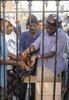
Street people being fed in downtown Kingston.
A NEW push to reduce the number of mentally ill drug addicts or vagrants from the nation's streets has been implemented through a programme which takes treatment straight to their doors.
More than 200 mentally ill drug addicts, street persons and outpatients of the Bellevue Hospital in the Corporate Area are now receiving regular medical treatment and counselling in their homes each month under the Health Ministry's expanded Community Mental Health home care programme.
Last month, 1,781 persons were treated in Kingston and St. Andrew, St. Catherine and St. Thomas, which make up Zone 3, the largest area.
Under the arrangement, mental health officers regularly visit individuals to monitor the quality of their social and physical environments, offer counselling and administer medication.
Street persons who are mentally ill are identified in weekend spot checks and either treated 'on the spot' or taken to the hospital where they are cleaned up and treated.
Since the start of the year six such persons have been reclaimed from the streets, treated and resettled in their communities, while on average up to 60 persons are seen each week in home visits by mental health response teams.
While a programme has been on stream since the 1960s, senior medical officer at Bellevue Hospital, Dr. Maureen Irons-Mor-gan says that there has been a new thrust towards expansion and further development of the programmes.
Yvonne Grant, mental health officer in charge of Zone 3, explains that although outpatients of the hospital are accommodated, the programme is not limited to these patients as any person having difficulty accessing mental health care is welcome. She said follow-up through home visits is primarily based on need.
"There may be persons who come under the regular home visits who are non-compliant or may be having personal problems. Sometimes it's young persons who have no insight into their condition, they know they are ill but do not realise just how ill they are, so we have to monitor them closely. We look to see that they are taking medications and taking them properly. We treat them but also check out their living conditions," she said. "There are lots of young men especially who are ill and also on drugs. If we don't follow up then they fall right back to where they were.
"(But) When a patient leaves Bellevue, a referral is sent to the health centre in his area, based on his address. Some-times, however, follow-up is difficult as the person may move around or is sent elsewhere by relatives, but once the individual comes in then treatment is initiated or continued."
She says first-time patients to the health centres are usually assessed and 'fast-tracked' to a doctor (psychiatrist) for treatment.
The Community Mental Health (home visits) programme is further bolstered by an emergency number (930-1152), and an emergency maintenance crisis team which is trained to respond to calls from the communities.
The team consists of five mental health officers and psychiatric aides, and responds to emergency calls from persons needing help, relatives or community members.
While the emergency team works alongside specially trained members of the JCF's Mobile Reserve, the treatment and physical handling are done by mental health officers.
"The police in general have been trained to deal with the mentally ill, but they do not do confrontations. The police are primarily there to offer support," said Dr. Irons-Morgan.