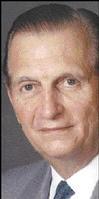
SEAGAIan Boyne, Contributor
OMAR DAVIES must be the most unpopular and hated man in Jamaica today. When he is not the object of venom in heated, bellicose conversations, he is the butt of unflattering jokes and ridicule. It's a good thing the Finance Minister has such a vast reservoir of self-confidence and self-assurance not to care one hoot about what others whom he would, no doubt, see as unlearned, think about him.
But when you try to calm people down - even educated, middle class people who should be familiar with basic economics -- and ask them what are the practical, realistic options before us, they are not as articulate as they are in venting anger and disgust. Apart from going back into history and showing that it was "Omar's disastrous policies" which got us in this deep mess today, they have little to offer by way of solutions now.
When the Finance Minister says, "I did it to save the poor pensioners and insurance policy holders", critics will say "it was your policies which wrecked the financial sector in the first place, so don't set the building to fire and ask us to praise you for responding valiantly with fire-fighting services!"
Let's not do it that way. Let us say we had elected the Jamaica Labour Party (JLP) and that party had inherited exactly what Omar Davies inherited on October 17. What would the JLP do? What different set of policies would they pursue to achieve growth and, more immediately, how would the JLP reduce the projected 8.4 per cent fiscal deficit - 100 per cent over what was projected before?
What alternative would the JLP have in the short term except to raise taxes and borrow further, thus merely postponing our hardships and burdens until later? So we would be in the same position today (or worse) and would still have to bite the bullet. But some would say we don't mind biting the bullet and tightening our belts - all phrases we have been familiar with since the 1970s - if we see a way out of the wilderness. Would the JLP's policies at least show us that way? This is the critical question.
CONSENSUS ON LOW-INFLATION MODEL
Parliament on Tuesday debated some of these issues, but the excitement and sensationalism of the Prime Minister's acceptance of the Rattray Report blighted the more serious discussion of the economic issues. Unfortunately, I was not in the House and the media did not help in sufficiently publicising this important debate, but I asked a reporter for copies of the written presentations which were available - Opposition Leader Edward Seaga's (which Mr. Seaga himself subsequently sent me) and Opposition Finance Spokesman Audley Shaw's. The contrast between the two could not be more striking.
Edward Seaga was methodical, systematic, ironic, graceful, statesmanlike; Audley Shaw played to the gallery - and obviously to the media - and revelled in polemics, histrionics, and political theatrics, ending dramatically:
"On the face of this scandalous state of affairs, in which the Minister (of Finance) has misled the people of Jamaica - in which the ship of state continues to drift like a helmless vessel, the Minister who is now without credibility should resign his position and the Government should resign and call a fresh general election in which the people of Jamaica can decide based on truth, the whole truth and nothing but the truth so help us God". Amen, Praise the Lord, brother!
I like Audley Shaw. When we meet he is warm and personable and he knows I rate his emotional competencies very highly. I know of no Jamaican politician who exceeds his platform skills, who has more political savvy, who is more street-smart and who knows more about effective political communication. Only Pearnel Charles and Portia Simpson I know of who can match his skills (And even there, Pearnel is not as strategic as Audley, who is brilliant at political chess). Audley Shaw knows how to tug at the heartstrings of people and if I were a politician opposing him, I would be scared stiff.
But Audley needs to learn that if we are to take him seriously as a future Prime Minister, and if he is to effectively win our trust over Bruce Golding -- another first-rate communicator -- he has to show sobriety, restraint and depth, and not play to our emotions all the time. We are grateful for his sniffing out of scandals, but a future Prime Minister has to be more than a muckraker. He can learn a few things from Eddie Seaga.
Eddie Seaga took the debate seriously and really engaged in a sober intellectual exchange with the Finance Minister. I know the Minister personally appreciated Seaga's approach.
In the speech, the Opposition Leader first dealt with the empirical facts about the economy. He simply showed the consequences of taking certain steps and provided a good economics education to any interested member of the public who might have been in the House. He asked the Minister serious, not frivolous or political questions. After outlining certain undeniable, uncontroversial consequences of either increased taxation or increased borrowings, Mr. Seaga said, "The Minister of Finance must indicate in specific terms if Government will accept the consequences of drastic adjustment and stay the course." Every one of Mr. Seaga's questions was relevant and ironic.
Importantly, the Opposition Leader showed that he accepted the low inflation, stable exchange rate model which the Government is following, stating bluntly, "Both low inflation and exchange rate stability are essential to any successful economic model".
But Mr. Seaga said something was missing, spicing up the debate: "The missing link in the present model, which accounts for the lack of economic growth, is adequate appropriate investment necessary to spur growth and investment".
Now we have a serious intellectual debate! Seaga then proposes his own model - "A low inflation growth model". Friends, start with Robert Buddan's excellent Sunday Gleaner article last week on "Market, State and Development" and start doing your reading on the state versus the free-market and state-led versus neo-liberal models of economic development. For Eddie Seaga is saying that no model which is totally dependent on neo-liberal, free-market, minimalist state philosophy can take Jamaica out of its present economic doldrums.
"The emphasis on Government intervention is a necessary element at this stage", Mr. Seaga told the House on Tuesday evening. The Finance Minister told me, in a private conversation, that one of his colleagues (the Minister's) shouted "State capitalist", to which Seaga sagaciously replied, "I have always resisted labels". Vintage Seaga. Mr. Seaga then went on, interestingly, to favourably mention Highway 2000 and the North Coast Highway and the re-development of the Sangster International Airport, saying they will have some positive impact. A good debater knows when to make concessions, which only enhances his credibility, and Eddie Seaga in that debate on Tuesday provided the House with a high-quality presentation, unlike his colleague, Audley Shaw, who went for the headlines (But he was, happily, blighted!)
Said Seaga after talking about those mega-projects: "But more investments with greater job creation are required not only to jump-start but move the economy". Not wanting to sound ideological, Mr. Seaga made the pragmatic point that "in circumstances of uncertainty" the private sector is "naturally reluctant to provide the required investment". He then made the eminently sensible point: "In these circumstances, Government can either wait on appropriate investments which will not be forthcoming to the extent required, or proceed to promote appropriate joint ventures to lift the economy".
THE STATE'S ROLE
Robert Buddan in his column last week made an excellent case for state activism, or the developmental state as it is called in the literature, and he notes the World Bank's about-turn a few years ago with the issuing of a special World Development Report praising the role of the state in development. Today, many leading economic scholars are pointing to the positive role states have played in economic development, how they have revolutionised production, trading and investment in East Asia, and how they have helped to build the American and European economies.
Buddan was insightful in pointing out that the People's National Party (PNP) successfully campaigned on its investments in infrastructure, transportation, education and training; in short, on its state-led initiatives. "The re-election of the PNP was a positive verdict on the need for the state in development. The PNP campaign highlighted what the state achieved and what its plans were for the future. The performance of the private sector was not anything the Government could campaign on". Absolutely right, but the PNP in its rhetoric scorned the JLP's proposals for mega-projects and used neo-liberal arguments to attack the clearly activist state which Mr. Seaga was boldly proclaiming.
The Patterson PNP probably learned from Michael Manley's failures, for he talked about socialism while he had to abandon many socialist projects after his rhetoric frightened away many, and played into the hands of the reactionaries. Patterson did not ideologically push the activist state but, as Buddan rightly pointed out, the solid achievements were achievements of the state. The people looked to the action and results, not the political rhetoric, which was all about the free market and the private sector being the engine of growth.
But now Seaga has put squarely on the table for debate the role of the state in economic development, and we have to take him seriously for he presented himself seriously. What plans does the Minister of Finance have to boost export earnings and create jobs?
Foreign Direct Investments have been increasing significantly here but these investments are not translating in job creation. Having a sound macroeconomic foundation is one thing, Mr. Seaga rightly hinted, but if it does not result in growth and jobs, it not only will not "trickle down" to the masses, but it won't be sustainable.
Seaga, however, was less than convincing in going back to his performance with apparel in the 1980s when, he admitted, the economy faced "an even deeper crisis than at present". I wonder whether Audley, in all his polemical flight, heard that admission from the Leader? What was achieved with apparel cannot easily be achieved with any industry today.
The Information Technology (IT) sector which Mr. Seaga admits is one with great potential for Jamaica has experienced a downturn in North America and at best will not absorb the large numbers of unskilled Jamaicans which the apparel sector absorbed.
The IT companies here will tell you of their problems in hiring competent people for the sector. And the entry requirements are higher than for apparel. The international environment does not favour the type of labour expansion which took place under the JLP in the 1980s. Small-scale entrepreneurial activities are a better bet and that is why the JLP's proposals for support for venture capital and direct incentives to producers makes sense if we are to move the economy. But the JLP leader underestimates the obstacles in getting the mega-projects moving: The state, if it cannot get enough money for housekeeping expenses, will be hard-pressed to lead the way in some mega-projects. But I believe Mr. Seaga is dead right in accepting the philosophy of an activist rather than a minimalist state, which is the mantra of the market fundamentalists.
Mr. Seaga has done the country a service by taking the high ground in this opening debate. In Omar Davies we have one of the sharpest, most incisive and formidable intellectuals in the country. The next time these two men come together to debate - and let it be for hours - it should be broadcast live, for it seems they think we deserve more than puerile propaganda.


















