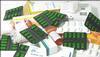
- Norman GrindleyThis assortment of prescription drugs came from one woman's house, even after she had recently dumped the ones that had "changed colour", she said.
Glenda Anderson, Staff Reporter
MANY homes in Jamaica have a stockpile of either properly stored medication or random pill boxes lying around.
In fact, the practice is so common that many persons have what could easily be called their own private "pharmacies" at home.
Rows of small brown or white bottles with faded labels or unclear expiry dates and vials of syrups that have either crystallised or changed colour, are just a few of the medications still on some cabinet shelves long past their effective dates.
This has long been the concern of officials of the Ministry of Health (MoH) and the Pharmaceutical Society of Jamaica who have again called on Jamaicans to be much more vigilant in monitoring prescription and other items kept at home.
"We remind the public that all medication must be kept out of the reach of children. Medication should be stored in locked cabinets with the keys kept by a responsible adult," read a statement from the MoH.
According to Vivienne Watson, president of the Society, "while there are no clear figures as to the extent of the practice locally, it is widespread. Many persons are guilty of storing expired drugs, especially antibiotics, and sharing, exchanging or 'passing on' medication. We can't emphasise enough how dangerous this practice is."
However, Mrs. Watson stated that "there is nothing wrong with stocking cupboards or medicine chests, but when it comes to prescription items, the consumer has to be very careful," she says.
Vulnerable
Describing some of the things that could go wrong if prescription drugs are shared, she said "the person with whom you share may have an allergy, or the item may be way past its effective date and even if it is a prescribed item, if it is not properly stored then it can still be dangerous."
The elderly, she said, were among those who were particularly vulnerable as often they were on different medication regimes at the same time.
"In the case of the generic drugs, they may have three or four types of the same drug. They may carry different names, they may look differently but have the same active ingredients, so there are times when even if the doctor has taken them off one they are confused or forgetful and interchange the old and new drugs and run into problems."
She said that securing the items was also another concern, especially where children were involved.
"Persons really shouldn't have medication lying about. As soon as the course is finished it should be disposed of. It's often funny how often it's the children and not the adults who are able to open the tamper proof caps."
Recently a six-year-old student of Munro Preparatory School in St. Elizabeth overdosed on Nivia Quine tablets, an anti-malarial drug.
Nivia Quine is the trade name for chloroquine sulphate. It is also used to treat a liver condition, hepatic amoebias, a type of the Lupus disease, (lupus erythematosus) and rheumatoid arthritis. Persons travelling to countries which have a history of malarial infestation are also prescribed the drug as a prophylactic.
Leonie Wallace, of the local Pharmacy Council, explains that the drug can also have wide-ranging negative effects including extensive liver damage, gastric upsets, convulsions and is highly toxic when overdosed.
She said that it is usually dispensed according to the length of the individual's stay, and, in the case of children, the dosage is based on the child's body weight.
Expired drugs
Consumers are also warned against getting rid of expired drugs in the home medicine cabinet themselves.
In an earlier Gleaner interview one pharmacist warned that "flushing them away could introduce unsuitable substances into sewage-treatment plants, burying them could also be problematic especially if this is done close to the water table and dumping them into garbage puts pets and children at risk."
Since many drugs are sulphur-based, explained Nerissa Lawrence-Reid of the Pharmaceutical Society of Jamaica, burning will only add to air pollution, and the carbon emitted contributes to global warming.
She said that expired drugs will not only have weakened potency but they might build up metabolites (broken down substances), which are sometimes toxic.
In an attempt to address the situation the Society launched a "Brown Bagging" programme where consumers were encouraged to take along expired medication to the campaign location or their local pharmacies to have them collected for proper disposal.
The Society is now making another appeal to Jamaicans to "clear out the medicine chests and cupboards," and take in all expired medication or extras to local pharmacies or pharmacists.
In addition, the Society has regular public education lectures to sensitise the public on the dangers of harbouring expired medication or securing prescription or other items.
She says that pharmacists also have the responsibility to assist with 'destruction and disposal' of drugs as part of their professional code of ethics.
"I think it's our responsibility, and duty as pharmacists (keepers and dispensers) to ensure safe use and disposal of these drugs."