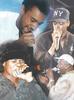
Clockwise, Shaggy, Bounty Killer, Barrington Levy and Lady Saw.
Elena Oumano, Freelance Writer
AT HOME, reggae is plagued with tribal disputes and violence at shows. Yet, smart heads in Jamaica's and other Caribbean nations' music industries are looking beyond their borders to raise their music's international profile through natural alliances with rock, pop, and hip hop.
Barrington Levy's roots yodel is now trademarked in the United States, thanks to his work with rapper Shine. Bounty Killer's bass flow currently anchors No Doubt's Hey Baby and Lady Saw is in demand with the likes of Missy Elliot and Vitamin C. The list of Stateside collaborations is lengthy and growing.
The past year confirmed that Shaggy is the man for all time. Hot Shot, released August 8, 2000, is a signature Shaggy fusion of pop and R&B with reggae's one drop riddim and deejay style that blew up to multi-platinum heights in 2001 to become Billboard's number 2 album of the year. One would expect all of Reggaedom to be exultant, yet various voices in Jamaica's music community are still protesting that Shaggy's album "isn't reggae".
Embracing Shaggy as reggae's own makes it possible to walk through the doors he's opened. Rejecting his reggaeness means rejecting the opportunities he offers. One is reminded of the attacks on Bob Marley at the height of his late 70s early 80s popularity for "diluting the music". This sour grapes attitude is also reflected in a growing negativism heard in certain artistes' lyrical content that condemns and excludes a large body of listeners and therefore narrows reggae's vision and appeal.
It's a dangerous and self-defeating departure from the music's traditionally high-minded inclusiveness.
The Reggae Grammy 2001 nominees have all followed the blueprint of hard work, elevated philosophy and smart marketing. Junior Gong's Half Way Tree, produced by Stephen Marley, reflects Bob's philosophical aims and universal mindset with a seamless fusion designed to appeal to dancehall, roots and hip-hop heads. Ky-Mani, a product of the Jamaican countryside and Miami urban experience, pays homage to his roots in Many More Roads. Though Luciano fever has cooled in recent years, the Messenger's unflagging efforts merit his nomination for A New Day. Beres Hammond's Music Is Life should be an inspiration to any artiste. How many talents come up with their finest album after 30 years? Even the watered-down Island Warriors, a compilation of Hawaiian 'reggae', testifies to the benefits of canny promotion.
The talent is there, as always, and marketing strategies are coming into place. Credit is due, in part, to Rebel Salute, last year's Air Jamaica Jazz & Blues (January 20 23), East Fest, Reggae Sumfest, Sashi and other events promoting music tourism, as well as to the annual Caribbean Music Expo, in Jamaica, and Decibel, in Port of Spain, Trinidad (May 23-24, 2002). These conferences allow the local industry to network with U.S. major label executives, brainstorm on key issues and showcase emerging talent. As a result of last year's debut Decibel conference, several Caribbean artistes have performed in the States and formed relationships with A&R executives and music buyers.