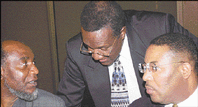













Special CARICOM meeting opens THE SPECIAL meeting of CARICOM's Council for Trade and Economic Development (COTED) opened at the Jamaica Conference Centre yesterday morning with a call from Council Chairman, Elvin Nimrod, for "a frank and critical assessment" of the region's trade status in preparation for upcoming international trade negotiations. The meeting was held in preparation for a series of major international trade negotiations in which CARICOM states will be involved, among them the ACP-EU New Trading Arrangements, deliberations for the establishment of the Free Trade Area of the Americas (FTAA), the fourth World Trade Organisation (WTO) Ministerial Conference in Qatar in November. In addition, bilateral negotiations are scheduled to take place between CARICOM and the Dominican Republic and Cuba and CARICOM. Mr. Nimrod, Grenada's Minister of Foreign Affairs and International Trade, told regional colleagues that it was important for COTED to develop the best strategic approach to international trade negotiations and assemble the best technical team. "Issues like special and differential treatment, technical assistance and small economies must remain at the top of our agenda throughout these negotiations," he said. "Liberalisation is a reality. Therefore we must focus attention on how we can participate fully in the global economy," he said. He also urged regional Ministers of Foreign Affairs and International Trade and other delegates to co-ordinate their efforts to maximise benefits from the negotiation process, given the financial and human resource constraints among CARICOM member states. Pointing to the recent trade policy review in Geneva involving the Organisation of Eastern Caribbean States (OECS), Mr. Nimrod said the support given by the governments of Jamaica and Barbados showed that greater benefits can be derived when CARICOM states work together. Minister of Foreign Affairs, Anthony Hylton, told the opening session that careful preparation for international negotiations is imperative, since Caribbean countries are already being faced with the systematic erosion of trade preferences, even though many of the international trade regimes allow for a period of transition to free trade. He drew reference to the UK Intervention Board's recent denial of the application by the Banana Export Company (BECO) to be registered as a traditional exporter to the European market. "Had the UK Intervention Board held its position Jamaica would have been denied the opportunity to make use of the last vestiges of a preferential import regime for bananas which comes to an end on December 31, 2005, when a tariff-only regime would apply," Mr. Hylton said. "Yes, the matter has been resolved, but the message was profound. We will experience nothing but the darker side of globalisation and trade liberalisation if we do not equip ourselves to be able to actively participate in the new global and trade environment." The Minister called for the regional private sector to become more involved in deliberations on trade policy issues. The meeting also looked at plans for the establishment of the Caribbean Transnational Conference which will bring together CARICOM Trade Ministers and the Chief Executive Officers of major CARICOM companies to discuss the operations of the Caribbean Single Market and Economy (CSME).
|